
Education as content
What if I showed subway surfer videos next to my teaching slides?

I have been thinking non-stop about a comment that made me chuckle during lunch at my parents' house last Sunday. It wasn't Daniel's political quip, which wouldn't translate anyway. It was, unsurprisingly, from Pedro.
My sister was missing lunch because she was taking Colombia’s high-school exit exam (called ICFES or Saber 11, depending on how old you are). Pedro asked us, jokingly, if we were aware of the subway surfer videos the government now includes in the test to help kids focus during the 4+ hours that it takes to complete it. As funny as it is, I can't help but think it would probably be effective (though my evidence is purely anecdotal). The joke stuck with me. It captures a genuinely concerning trend: the impact of social media on attention and learning.
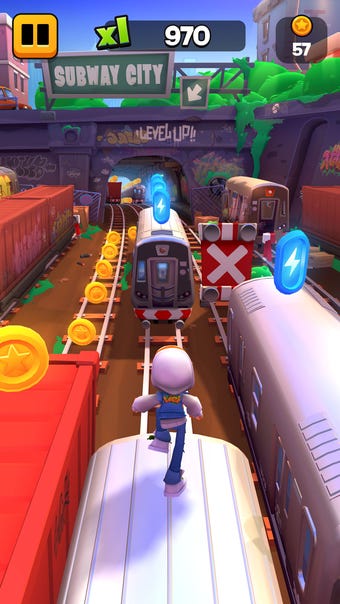
I have translated my concerns into a plea I have been repeating to my students since last semester: do not take classes as content. This plea generalizes to a wider principle: do not treat education as content. I’m not simply worried about how the (interesting, complex, but boring) ideas I teach compete with actual content. I worry about students inadvertently approaching their formal learning experience as they do tiktok, reels, short videos in general.
Content is something that you “consume.” Content seems to fulfill two purposes: 1) entertain you or 2) sell you something. You can swipe up when you get fed up with a particular piece of content. You can have some content running on the tv, while you browse content in other formats on your cellphone. In fact, “content producer” is apparently a completely respectable occupation. “Influencer” has too much of a bad rep, but if you “create” content then it’s fine. People subscribe to these producer’s pages and stop following them once they stop being entertaining. My plea: this is a terrible way to approach learning.
I’m convinced most students these days do approach learning as content. I once received a comment in a teaching evaluation telling me I should record lectures so they could watch them in 2x (mind you, I’m not a slow talker). Every semester there are a handful of students who casually keep one airpod in after the class starts. There are lengthy discussions within the faculty about how to approach cellphone bans in the classroom. Those discussions would not be necessary if students were considering classes in the same way one does a workplace meeting, instead of an hour-twenty-minute podcast video.
What I ask from my students is not that they “consume” my content. I ask from them that they engage with the ideas I’m framing. I want to present them a way to think about relevant issues (why are some countries richer? Why did Colombia's growth only pick up after 1905?), but more importantly, I want them to come up with their own way of thinking about those issues. Of course, that means the traditional way to teach a course is rather obsolete, and I’m striving to make courses more explicitly collaborative. Still, a non-trivial part of any class is reading something someone else wrote, or hearing other people’s explanations. It’s easy to approach those parts as if they were “content.” Which does a disservice to both content and learning. It reduces the classroom to just another feed to scroll through, while asking the feed to somehow educate you. I could never compete with hypersped videos of someone building a mansion with only one bucket and I refuse to seriously consider showing them next to my slides.
Afterthought: I suspect the current panic over AI devaluing a university degree misses a crucial point. As AI floods the world with surface-level content, it will make the passive, consumption-based approach to learning the default for most people. I find it very plausible that college-level skills will become even more valuable when most people face learning as they do content.
Escuchas:
Jesse Baez - Éramos Perfectos. Mi canción favorita en el mundo en este momento.
Lecturas
Paul Krugman - Understanding Inequality (Parts I to VI)